Rooms are instruments.
Nodal is a studio of acousticians, architects and model makers in Porto. Since 2011 we have tuned halls, studios and music rooms across Europe.
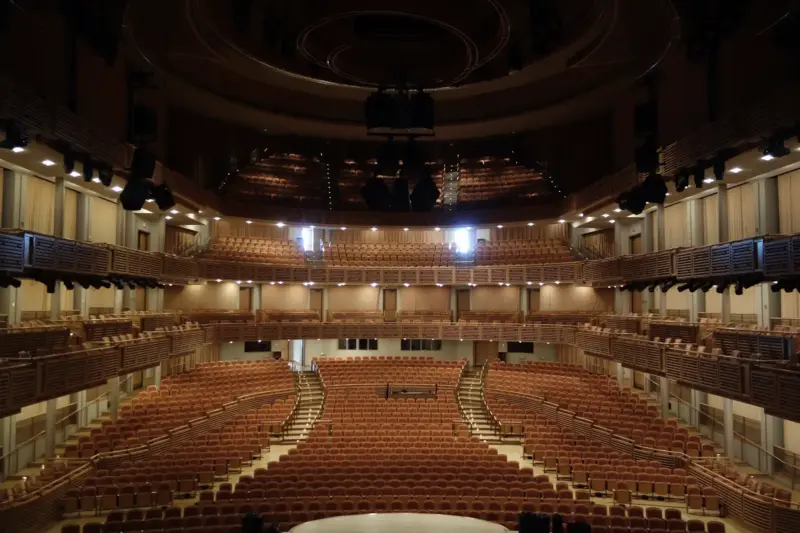
Named after the lines where nothing moves
Scatter sand on a metal plate and make the plate ring. The sand leaves the parts that shake and settles along the parts that do not. Those still lines are called nodal lines, and the pattern they draw changes with every note.
Air in a room does the same thing. Most acoustic problems, such as a booming bass, a dead seat or a singer who cannot hear herself, come from where those lines fall. We find them before the walls are fixed, when moving one costs a pencil stroke.
How we work
-
Listen
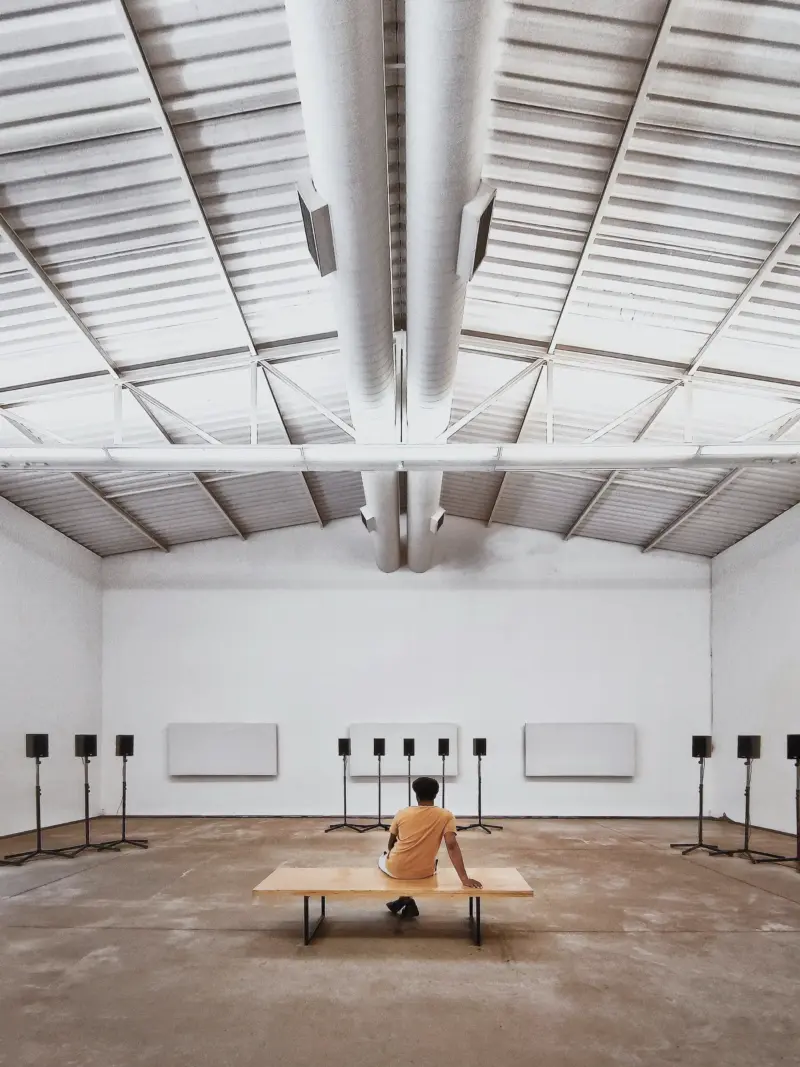
Every project starts with a day and a night of recording on site, and with the people who will play there. We ask what they cannot hear now. The answer is usually more useful than the brief.
-
Model
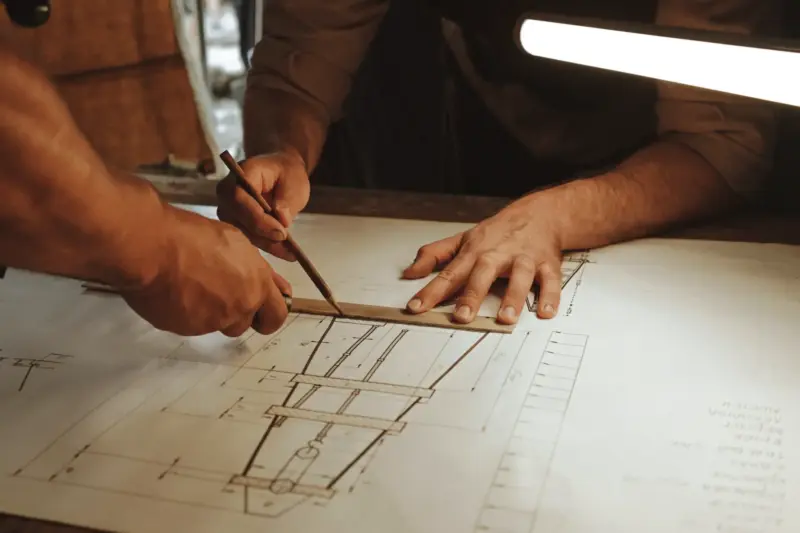
We test each room twice: in software, where we can move a wall in a second, and as a 1:10 plywood model, where we can put a microphone in every seat. When the two disagree, we trust the plywood.
-
Build
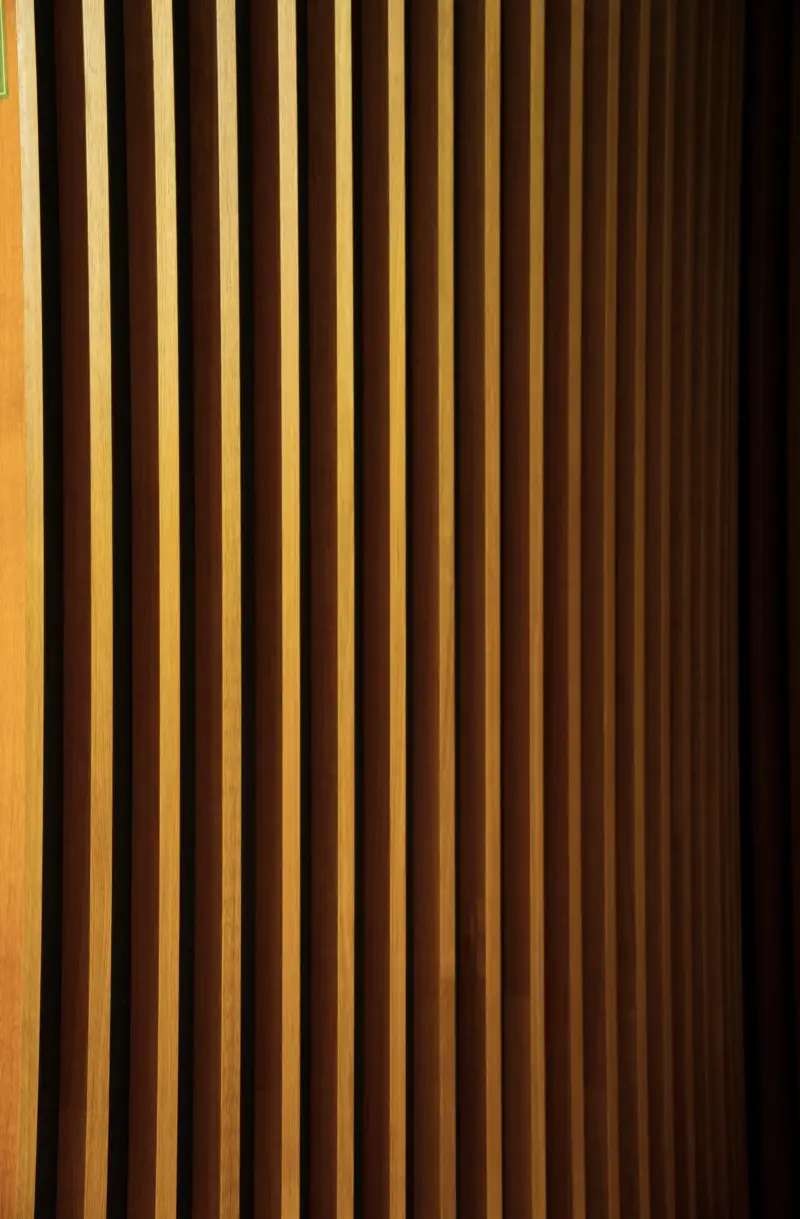
We draw every surface that touches sound, down to the joint, and we visit the workshop before anything reaches the site. A hall is lost in details like a hollow stage riser or a rattling grille.
-
Tune
A room is not finished at handover. We measure it empty, then with an audience, and we return after the first season to adjust what a full year of concerts has shown us.
Try the plate
This is the experiment the studio is named after, simulated with twenty thousand grains of sand. Drag the frequency and the sand finds a new figure. Move through it and it scatters, then returns.
Low notes draw a few broad lines. High notes draw many fine ones. That is why bass is the hard part of every room: its quiet zones are large enough to sit in.
People
Inês Carvalhal
Founding partner, acoustics
Mattias Öberg
Partner, architecture
Leïla Benamar
Head of measurement
Jonas Feld
Modelling lead
Carmo Teixeira
Studio director
Have a room in mind?
Tell us what it has to do and who has to play in it. We answer every enquiry within three working days.